All Months, August August 3, 2025
The Perseids and Ancient Stargazing
Stargazing in Ancient Greece: Myths in the Sky
Long before telescopes and star charts, ancient Greeks looked up at the night sky and saw more than stars—they saw stories. Each constellation was tied to a myth, transforming the cosmos into a tapestry of gods, heroes, and monsters. Orion, the mighty hunter, chases the Pleiades across the heavens. Cassiopeia, punished for her vanity, is bound to her celestial throne. Andromeda, Perseus, Pegasus—the night sky becomes a living mythological map.
These stories were more than entertainment. They served as seasonal markers, navigational tools, and reflections of cultural values. For example, the rising of Orion marked the beginning of winter, a signal for farmers and sailors alike. By understanding the myths, the Greeks also understood their world.
Even today, we still refer to the stars by the names passed down from these ancient tales. The myths of the sky remain etched above us, visible each night, connecting us to the ancients who first named them.
The Perseids: A Celestial Spectacle in Athens
Every August, the Perseid meteor shower dazzles the skies of Greece, peaking around August 12th. Caused by debris from the Swift-Tuttle comet, these meteors appear to radiate from the constellation Perseus—a fitting connection to Greek mythology.
For Athenians and visitors alike, this is a magical time. Clear summer nights and minimal rainfall offer perfect viewing conditions. Some of the best places to witness the Perseids around Athens include:
-Lycabettus Hill: With panoramic views of the city and less light pollution, it’s a favorite spot for local stargazers.
-Sounion (Temple of Poseidon): Imagine watching falling stars from the site of an ancient temple, perched above the sea.
-Mount Penteli: Further from city lights, it offers dark skies and cooler air—ideal for a quiet meteor-watching night.
Bring a blanket, turn off your phone, and let the cosmos put on a show that the ancient Greeks, too, once marveled at.
Ancient Observatories: Tracking the Stars in Athens
Athens, the cradle of Western science, was home to some of the earliest efforts to understand the heavens systematically. Ancient Greek astronomers weren’t just myth-makers; they were also pioneering scientists.
One of the most notable achievements was the Antikythera Mechanism, often called the world’s first analog computer. Though not from Athens directly, it exemplifies the technological ambition of the era. This intricate device could predict celestial events with stunning accuracy.
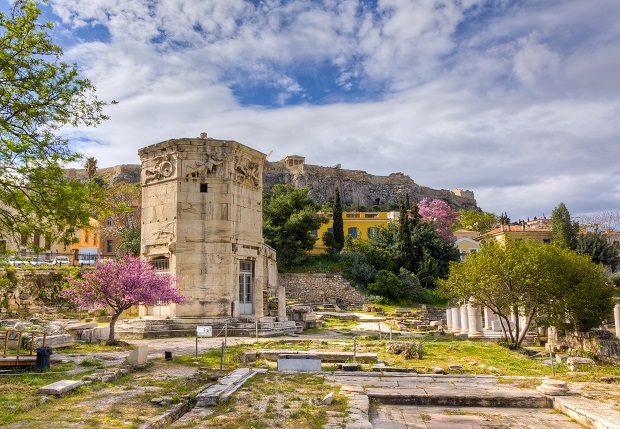
Closer to the heart of Athens, the Tower of the Winds stands as a testament to ancient observation. Built in the 1st century BCE, this octagonal structure featured sundials, a weather vane, and a water clock, combining timekeeping with astronomical observations.
Philosophers like Meton of Athens introduced the Metonic cycle, aligning solar and lunar calendars, showing that even in the 5th century BCE, Athenians sought harmony between the rhythms of earth and sky.
As we watch the Perseids this August, it’s worth remembering that stargazing has deep roots in Athens. For the ancients, the stars were both divine symbols and scientific puzzles. Their legacy still guides our eyes upward today.